Horse Fly vs House Fly: Appearance, Bite, and Behavior Compared
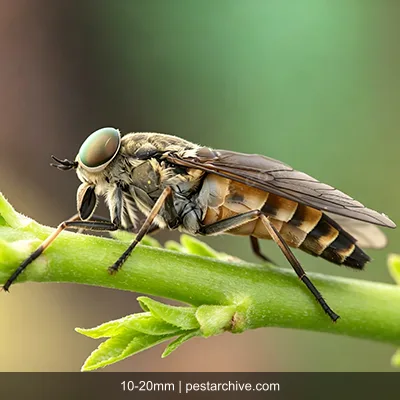
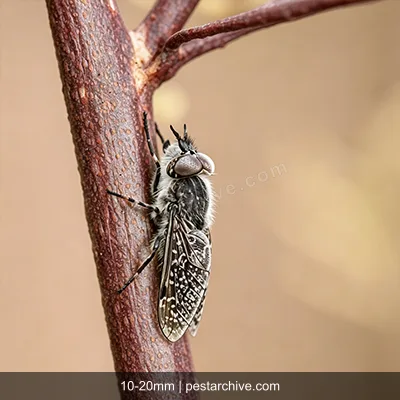
Real scene: A large fly is sitting on your kitchen windowsill. It's dark and noticeably bigger than the flies you usually see. You walk over with a fly swatter. Suddenly it takes off with a deep, loud buzz, completely different from the light whine of a common house fly. You pause. Is this a big house fly, or a horse fly?
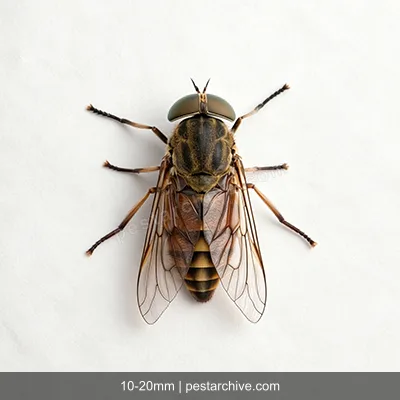
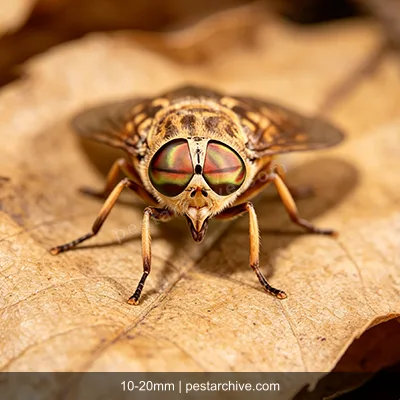
Quick answer: Three things tell them apart: size (horse flies are 10 to 20 mm and stocky like a bullet; house flies are 5 to 10 mm and flat), eyes (horse flies have large, colorful, metallic eyes; house flies have reddish-brown eyes), and biting (horse flies cut skin and suck blood, and it hurts; house flies don't bite).
Appearance comparison
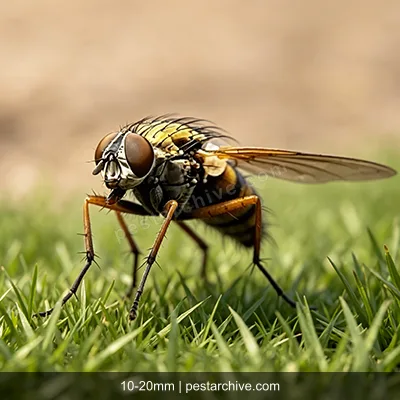
- Size: Horse flies are stout and solid, like a bullet. They're 10 to 20 mm long, two to three times larger than a house fly. House flies are flatter and narrower, 5 to 10 mm long.
- Color: Horse flies are usually black, green, or blue. Some species have a metallic sheen. House flies are grayish-black with four dark stripes on the thorax.
- Eyes: Horse fly compound eyes are very large, taking up most of the head. They're brightly colored in green, metallic blue, or purplish red. House fly eyes are reddish-brown and proportionally smaller.
- Wings: Horse fly wings are clear or patterned. When resting, they spread their wings out to the sides. House flies fold their wings flat over their backs when resting.
Mouthparts and feeding: The key difference
A horse fly's mouthparts are like a tiny surgical blade with sharp cutting structures. Female horse flies slice through skin with these blades, then insert their mouthparts into capillaries to feed on the blood that pools. That's why a horse fly bite hurts. It's actually cutting your skin. Male horse flies don't bite. They feed on nectar and plant juices.
House fly mouthparts are completely different. They're like a sponge-like pad that can only lap up liquid food. House flies can't bite or pierce skin. They just move back and forth between food, garbage, and feces, lapping up liquids and spreading bacteria. So house flies are a sanitation pest. Horse flies are a biting pest. The risks they pose are completely different.
Behavior comparison
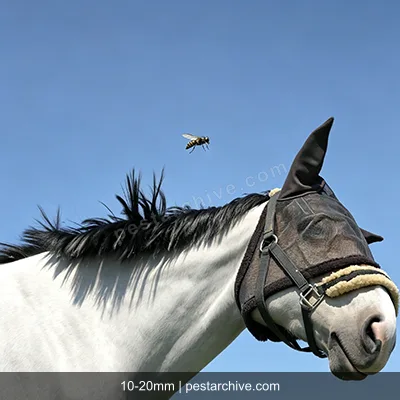
- Habitat: Horse flies are mostly outdoors, found in grassy areas, near water, pastures, and woodland edges. House flies are both indoors and outdoors, most common in kitchens, near trash cans, and around dining areas.
- Flight: Horse flies fly fast and powerfully. Their buzz is deep and loud, like a small drone. House flies fly slowly with a light whine. They often crawl on surfaces and take off and land repeatedly.
- Aggression: Female horse flies actively chase people and animals, circling repeatedly to find a spot to land and bite. House flies don't chase people. They're just drawn to the smell of food.
What to do after a bite
A horse fly bite hurts right away, then a red bump forms, usually 1 to 3 cm across. Wash the area with soapy water, apply a cold compress to reduce swelling and pain, and use an anti-itch cream for relief. Don't scratch. Horse fly bites leave larger wounds than mosquito bites, and scratching can lead to secondary bacterial infection. If the red area continues to expand beyond 5 cm, or if you develop a fever or pus, see a doctor.
Common mistakes
- Mistake 1: All large flies are horse flies. Fact: Several large fly species (like blow flies and flesh flies) are bigger than house flies, but they don't bite. Only horse flies have mouthparts that cut skin and suck blood.
- Mistake 2: Only female horse flies bite; males don't. Fact: That's actually correct, but telling male from female requires a magnifying glass to check the distance between the compound eyes. Most people can't do that on the spot. The safest approach is to treat any large, loud-buzzing fly as a potential horse fly and never swat it with your bare hand.
- Mistake 3: Horse fly bites transmit diseases. Fact: Horse flies can mechanically carry some pathogens on their mouthparts, but the actual disease transmission risk in China is very low. The bigger risk is secondary bacterial infection from the bite wound.