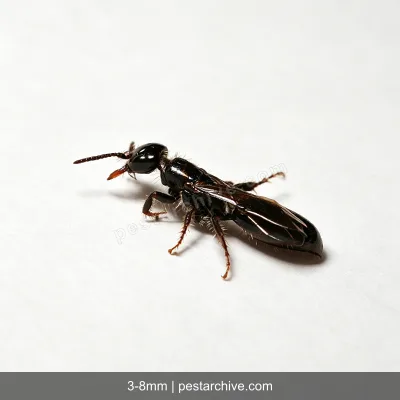
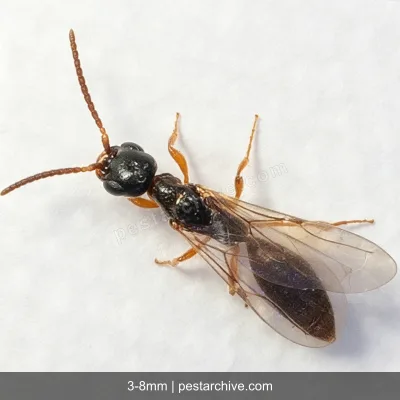
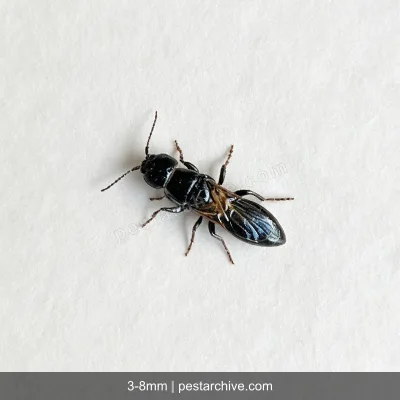
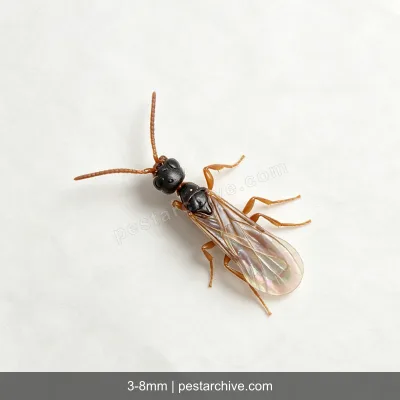
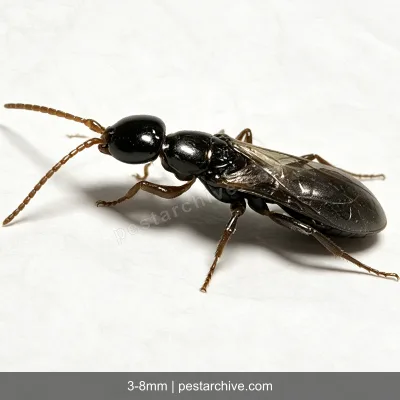
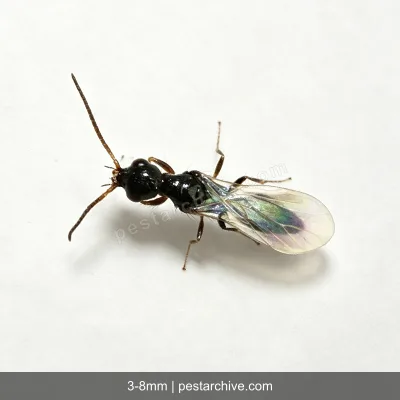
Bethylid Wasps Control & Removal Guide
(Parasitic wasp, Flat wasp)*Scleroderma guani* / Bethylidae
How They Get In
- New solid-wood furniture, flooring, and log building materials may carry bethylid wasp hosts (longhorn beetle larvae, etc.) in egg form from the factory — the wasps follow the wood borers and appear indoors.
- Used wood furniture and old wooden crates may already harbor wood-boring pests; bethylid wasps are brought indoors with them.
- When wood-boring pests breed in community landscaping trees and dead wood, bethylid wasps follow their hosts and fly indoors from outside.
- Bethylid wasps fly in through door/window gaps and balconies, then search for hosts in the emergence holes of wood ornaments, wood crafts, and log plant stands.
How to Get Rid of Them
- Pre-Treatment Inspection: Bethylid wasps are parasitoids of wood-boring pests. Finding them should first prompt inspection of wood members and furniture for borer problems. Check furniture surfaces for round emergence holes (1-3mm diameter) and fresh wood powder on the floor below. After locating the borer source, mark the areas needing treatment. Close doors and windows. Remove pets and children. Shake the spray bottle well.;
- Key Treatment Zones: Wood furniture emergence holes and joint crevices — female wasps enter and exit these holes searching for host larvae; spot-spray into holes to let chemical penetrate along the gallery. Floor cracks and edges — wood members beneath flooring may harbor borer larvae. Door and window frame wood joints — damp wood frames are vulnerable to borer infestation; bethylid wasps follow. Balcony log plant stands and wood ornament crevice emergence holes.;
- Application Method: Bethylid wasps are active in emergence holes and wood crevices — control uses a 'spot-spray into holes' strategy. Hold sprayer 10-15cm from emergence holes; apply short bursts to inject a fine stream of chemical deep into the gallery. Spray each hole for 1-2 seconds — avoid over-application and overflow. Spray furniture joint crevices along lines. Avoid heavy spraying on furniture lacquer surfaces to prevent damage.;
- Post-Treatment: Keep the area closed for 1-2 hours after spraying, then ventilate thoroughly. Treated areas can be used normally after the chemical dries. After spraying, monitor holes for fresh wood powder discharge — if fresh powder still appears, borers remain active and re-treatment is needed.;
- Ecological Considerations and Long-Term Protection: Bethylid wasps themselves do not damage buildings or furniture — their larvae feed on wood-boring pests. Wasp presence signals wood borer problems. Killing the wasps only addresses the symptom; treating the wood borers (longhorn beetle, jewel beetle larvae) is the root solution. For heavily damaged wood members, replacement is recommended, with anti-borer coating applied to new wood surfaces.
Prevention & Follow-Up
Bethylid wasps are natural predators of wood-boring pests. Finding them indoors is a clear sign to check your wooden furniture and structural timbers for wood-boring beetle infestations. Look for small round exit holes on wood surfaces and fresh powdery sawdust beneath. Treat any infested wood—inject an appropriate product into the exit holes, or replace heavily damaged wooden pieces. These wasps do not damage your home's structure. Killing the wasps alone won't solve the underlying wood-borer problem.