Silverfish
(Fish moth, Bristletail, Carpet shark)*Lepisma saccharina*
Identification & Appearance
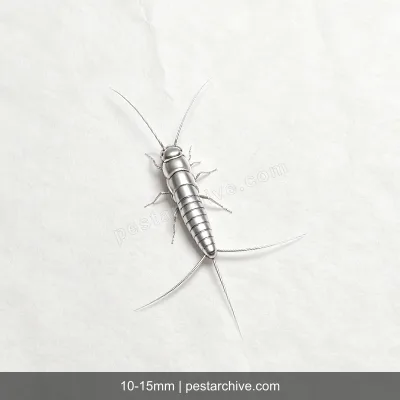
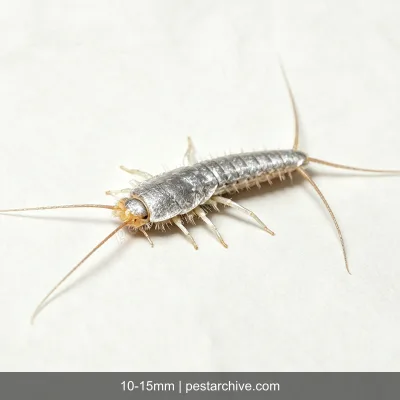
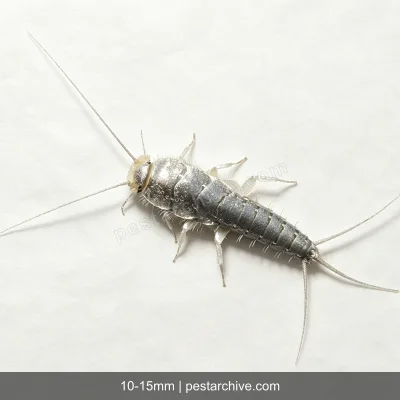
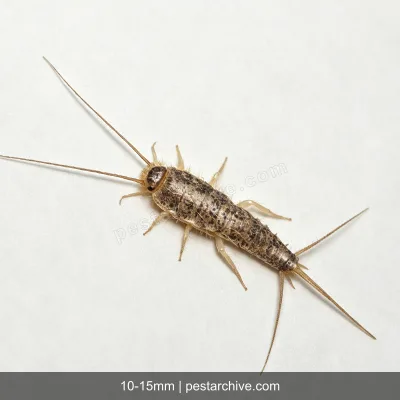
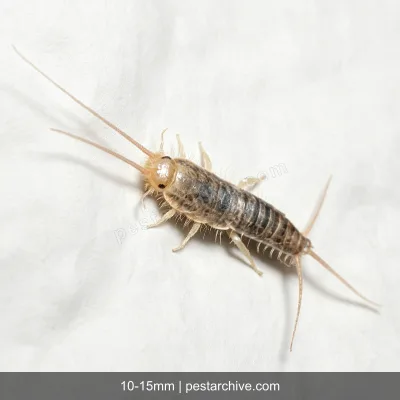
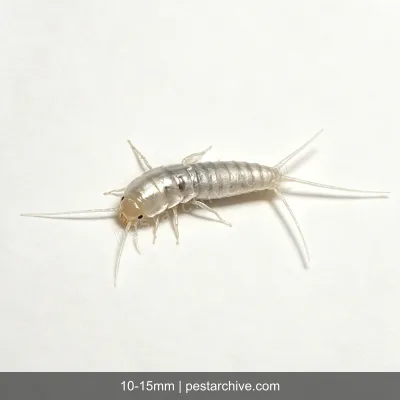
Silverfish are ancient, primitive wingless insects. Common household species include the common silverfish (Lepisma saccharina) and the firebrat (Thermobia domestica). Adults measure 10-15mm, with a flattened, spindle-shaped body covered in fine silvery scales, giving them a metallic sheen. They have a pair of threadlike antennae, compound eyes, and three tail filaments at the abdomen tip (two lateral cerci plus one central filament) — the most distinctive identification feature. Silverfish are ametabolous — nymphs resemble adults and gradually increase in size through molting, with no dramatic metamorphosis. Under favorable conditions (22-30°C, humidity above 60%), the egg-to-adult span takes 3-6 months, but adults are long-lived — surviving 2-3 years. Remarkably, silverfish continue molting throughout their lives (some species molt over 60 times), even as adults. They are agile crawlers, especially adept at navigating narrow crevices. They are photophobic (light-avoiding), hiding in cracks during the day and emerging at night to feed. Silverfish can survive months without food when necessary.
Habits & Hiding Places
Silverfish have a broad diet, feeding on clothing fibers (especially natural materials: cotton, linen, silk, wool), paper, bookbinding glue, wallpaper, photographs, sugars, and starchy debris. Indoors, they are commonly found in: wardrobes and clothing storage — the most typical silverfish activity zone. They favor natural fibers like cotton, linen, silk, and wool; synthetic fabrics are generally unaffected. Book storage areas and bookshelves — another important habitat; bookbinding glue and paper cellulose are primary foods. Bathroom and kitchen damp corners, baseboards, and floor cracks — accumulated organic debris provides food. Silverfish are humidity-dependent — activity decreases below 50% RH, and they cannot survive below 30% RH. Consequently, they are especially common in southern China's humid regions and during rainy seasons. Northern homes with dry winter heating see natural population declines. As nocturnal creatures, they hide behind wardrobe back panels, in floor cracks, and behind books during the day. Silverfish are distributed worldwide from tropical to temperate zones but are less common in cold, dry regions.
Health Risks & Damage
- Silverfish chew holes in clothing, preferentially targeting natural materials like cotton, linen, silk, and wool. A wool sweater or silk scarf repeatedly fed upon over weeks can develop multiple holes, causing irreversible damage to high-value garments. Synthetic and blended fabrics suffer less damage.;
- Silverfish chew on books, paper, bookbinding glue, and wallpaper, causing text blurring and surface damage to valuable books. In museums, libraries, and archives, silverfish are important pests to control. Wallpaper chewed by silverfish shows irregular etched tracks, affecting aesthetics.;
- Silverfish excrement and body fragments can be allergens, triggering skin itching and rhinitis in sensitive people. The secretions they leave along crawling paths form tiny specks that affect indoor cleanliness.;
- Heavy silverfish infestations can damage photographs, calligraphy, paintings, and collectibles — a loss for collectors. Old photo paper contains gelatin, which silverfish favor; treasured photographs can be destroyed.;
- Prevention centers on humidity reduction and cleanliness. In southern humid regions, place dehumidifying boxes in wardrobes. Vacuum regularly, reduce paper and cardboard clutter, and store woolens in sealed bags.
Common Species
There are 2 common silverfish species, with clear differences in morphology and heat tolerance between common silverfish and firebrats.
Common Silverfish
Lepisma saccharinumAdults 10–15mm, silver-gray with metallic sheen. Spindle-shaped body, wingless, covered in silver scales, with 3 long tail filaments. Prefers moderate temperatures of 22–30°C; commonly found in wardrobes, bookshelves, closets, and baseboard gaps.
Firebrat
Thermobia domesticaAdults 8–12mm, slightly smaller, brown-gray to dark gray with dark stripes and spots. Far more heat-tolerant than common silverfish; remains active at 35–45°C. Commonly found in boiler rooms, around water heaters, behind ovens, and near dryers — any high-temperature area.
Season & Region
Cosmopolitan. Optimal temperature 16–30 °C, RH >75 %. Summer (Jun–Aug) is the peak reproductive and activity period. Density is highest during the monsoon/Meiyu season (Jun–Jul) under high humidity. Remarkably starvation-tolerant — can survive >300 days without food.
| Region | Active Period | Peak Season | Notes |
|---|---|---|---|
| N. Hemisphere Temperate | May–Oct | Jun–Aug | Summer heat/humidity peak; winter activity reduced |
| N. Hemisphere Subtropical | Mar–Nov | Jun–Jul(Rainy season) | Highest density during Meiyu / monsoon |
| Tropical | Year-round | Rainy season | Year-round reproduction |