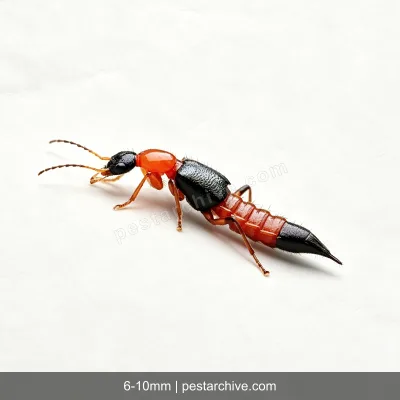
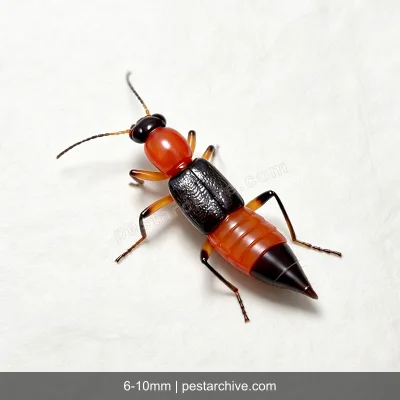
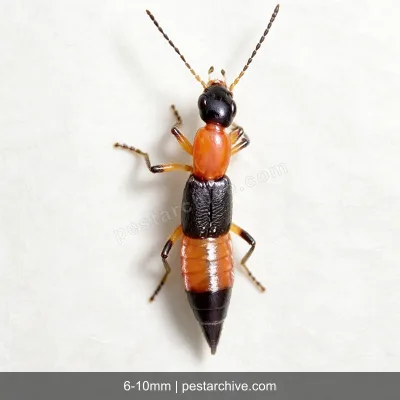
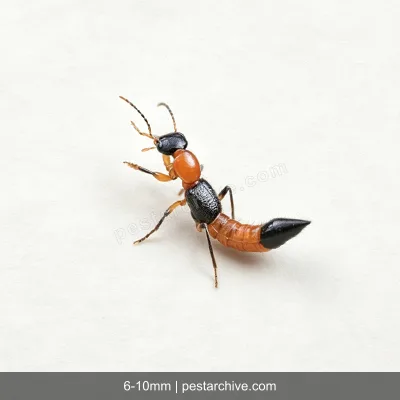
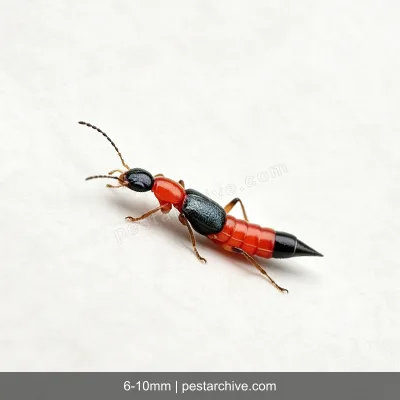
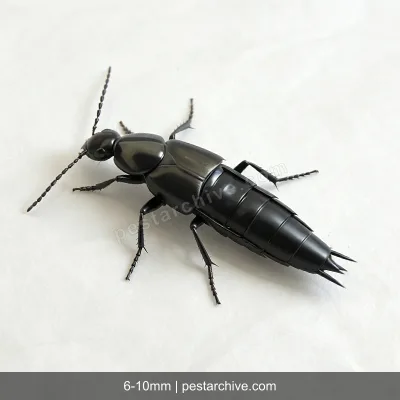
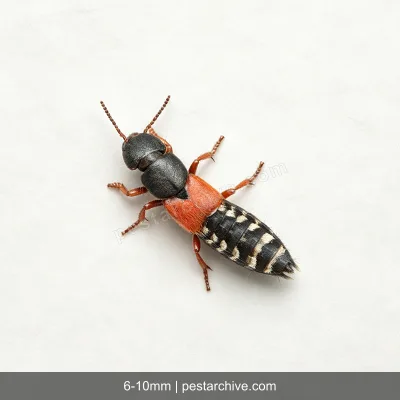
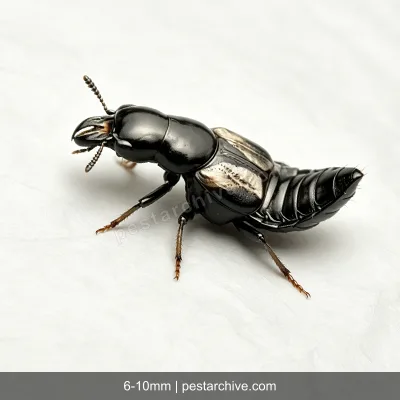
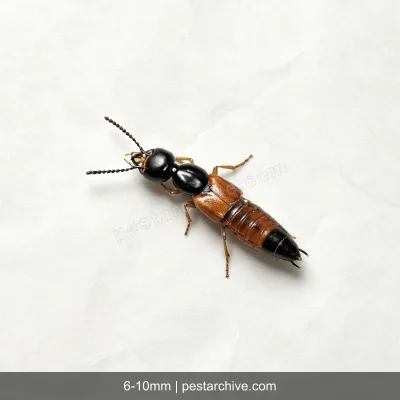
Rove Beetles Control & Removal Guide
(Whiplash beetle, Tomcat, Antlike beetle)*Paederus fuscipes* / Paederus spp.
How They Get In
- Paederus beetles are strongly attracted to light. At night, indoor lights draw them in through open doors, windows, and screen gaps — the brighter the light and the longer the windows are open, the more beetles enter.
- Ground-floor units near landscaping, woods, and farmland face the highest pressure — high outdoor beetle density combined with summer evening-to-night activity means large numbers can fly in.
- Evening ventilation with open windows allows beetles to enter directly with airflow into living rooms and bedrooms — their small size means standard window screens don't fully exclude them.
- Beetles landing on clothes, towels, and bedding drying on balconies at night are brought into bedrooms when laundry is collected the next morning — slapping or crushing a beetle at this point is the classic trigger for Paederus dermatitis.
How to Get Rid of Them
- Pre-Treatment Preparation: Rove beetle control centers on physical protection, supplemented by chemical spraying. Before spraying, check and close screens properly; minimize unnecessary nighttime light exposure. Bring balcony-dried laundry indoors before dusk. Close doors and windows. Remove pets and children. Shake the spray bottle well.;
- Key Treatment Zones: Windowsill perimeters and window frame gaps — the first landing zone after beetles fly in from outdoors; spray along windowsill edges evenly to form a protective residue film. Curtains and window screens — beetles contact the chemical when landing on curtains; focus on curtain folds. Balcony walls and around clothes-drying racks — the balcony is the buffer zone between outdoors and indoors. Entry door walls — beetles may enter through door gaps when doors open at night.;
- Application Method: Hold sprayer 20-30cm from surfaces and spray evenly. Spray windowsills and window frames along edges in lines to form a sustained protective band. Lightly spray curtains from top to bottom — complete saturation is unnecessary. Spray balcony walls along corner lines. During peak rove beetle season (summer), preventive spraying at windowsills and doorways before dusk each evening is most effective.;
- Post-Treatment: Keep the area closed for 30 minutes to 1 hour to allow the spray to settle and dry. Then ventilate for 30+ minutes before re-entering. Avoid spraying on skin, dishes, and clothing. If accidental skin contact occurs, wash immediately with copious soap and water. Do not wipe sprayed surfaces for 24 hours to maintain the protective residue film.;
- Critical Reminders and Prevention: NEVER slap or crush a rove beetle found on skin — gently blow it away or brush it off with a soft object. The pederin toxin is only released when the beetle body is crushed. Wash contacted skin with soap and water promptly after any beetle contact. In high-risk areas (south of the Yangtze River in summer), close screens at night, turn off unnecessary lights, and check bedding and clothing for beetles before sleep.
Prevention & Follow-Up
Install fine-mesh window screens and check them regularly for tears or holes. On summer nights, turn off unnecessary indoor lights—bright lights attract rove beetles toward your windows. If you see a rove beetle indoors, do NOT swat or crush it. Gently blow it away or use a soft object to dislodge it. Crushing the beetle releases a toxin that causes severe skin irritation and blistering. If you accidentally make contact, wash the area thoroughly with soap and water. In high-risk regions (south of the Yangtze River), keep window screens fully closed on summer nights and minimize indoor lighting after dark.