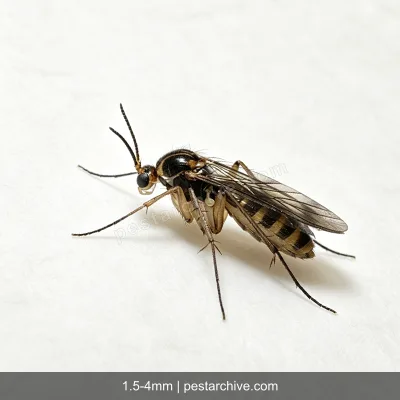
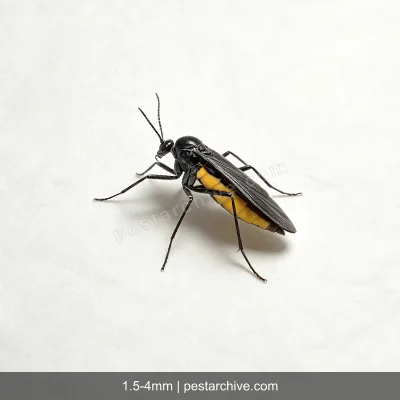
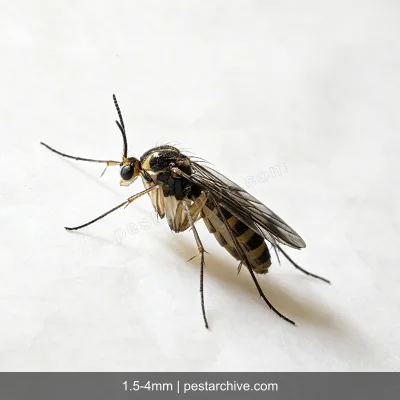
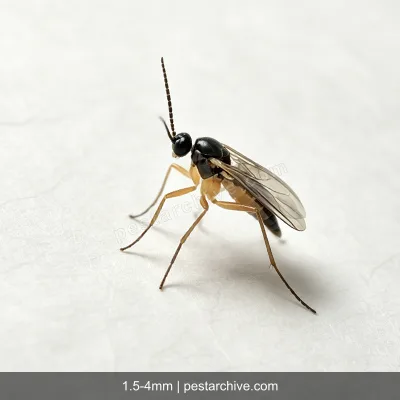
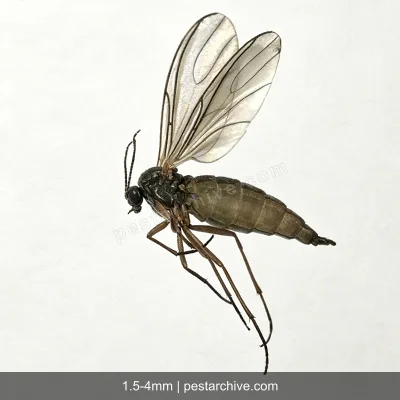
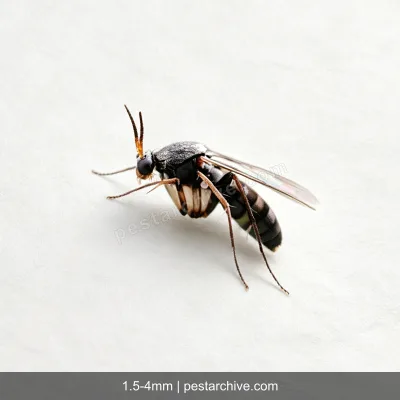
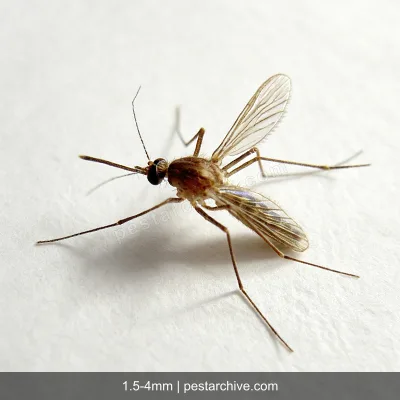
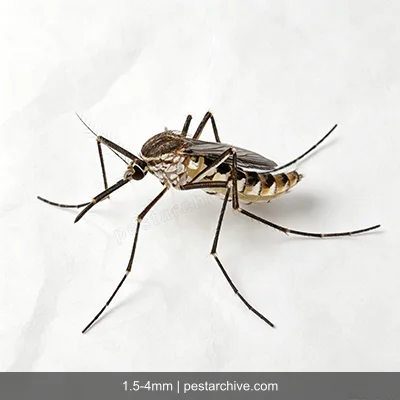
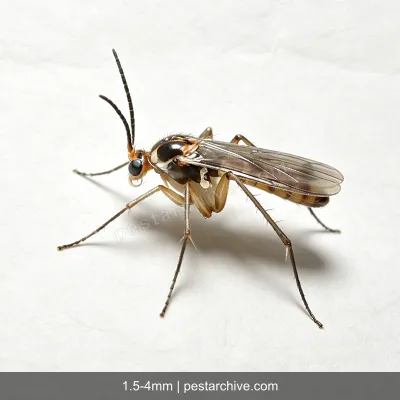
Fungus Gnats Control & Removal Guide
(Sciarid flies, Soil gnats)*Bradysia* spp.
How They Get In
- Contaminated Potting Soil: Fungus gnat larvae live in moist soil. Newly purchased plants, houseplants, and potting mixes may already carry larvae and eggs. Larvae feed on decaying roots and fungi in the soil, emerging as adults from the soil surface. Nursery and garden center plants under overwatered conditions are especially prone to fungus gnat infestation — the primary household source.;
- Door/Window Entry: Adult gnats at 1.5-4mm easily pass through standard window screen mesh, entering through door/window gaps. They are attracted to light and hover near windowsills and lights. Homes near landscaping and damp environments have higher gnat entry rates.;
- Indoor Damp Breeding: Even without new plants, fungus gnats can naturally breed around bathroom floor drains, balcony water accumulations, and kitchen sinks — anywhere with sustained moisture and organic debris accumulation. Larvae feed on decaying organic matter.;
- Gardening Material Import: Leaf mold, compost, and incompletely fermented organic fertilizers used for plants may contain fungus gnat eggs and larvae. If these materials are left unsealed after opening, eggs hatch and larvae develop in the moist environment.
How to Get Rid of Them
- Source Control — Water Management and Soil Amendment: Fungus gnat larvae require moist soil to complete development. Adjusting watering is the most fundamental control measure. Reduce watering frequency — wait until the top 2-3cm of potting soil is dry before watering again (insert a finger to check). Apply a 1-2cm layer of fine sand, clay pebbles, or perlite on the soil surface — the dry surface barrier prevents adults from laying eggs and blocks existing larvae from emerging. Use bottom-watering methods (absorbing from trays rather than top-watering) to keep the soil surface dry. Promptly clean tray water and fallen leaves.;
- Pre-Treatment Preparation: Isolate affected plants away from the main plant cluster. Clear fallen leaves and dead branches from pot surfaces. Close doors and windows. Remove pets, children, food, and dishes. Shake the spray bottle well.;
- Key Treatment Zones: Potting soil surface — the core adult egg-laying and larval habitat; lightly spray the soil surface until moist (avoid over-application that damages roots). Outer pot walls and trays — where adults land and rest. Balcony floors and wall edges — where gnats hover after emerging from soil. Door/window frame gaps and screens — block outdoor gnats from entering. Bathroom floor drains and damp corners — potential breeding and activity sites. For airborne gnats, light spraying of the air can knock down flying adults.;
- Application Method: Hold sprayer 20-30cm from surfaces and spray evenly. Lightly spray the soil surface to form a residue film. Spray outer pot walls and trays evenly. Cover balcony floors along wall lines. Lightly spray both sides of window screens to form a protective layer. For airborne gnats, close-range light spraying is effective. Avoid heavy application on tender leaves and flower buds.;
- Post-Treatment and Long-Term Management: Close doors and windows for 30 minutes to 1 hour after spraying; ventilate before resuming normal activity. Continue controlled watering — let pot soil dry adequately between waterings. Place yellow sticky traps near plants — yellow strongly attracts adult fungus gnats, providing monitoring and population reduction. Regularly clean tray water and fallen leaves. Quarantine new plants for 1-2 weeks before introducing them to the plant cluster. Fungus gnat problems typically improve noticeably within 1-2 weeks of implementing water control.
Prevention & Follow-Up
Cut back on watering—let the top layer of potting soil dry out between waterings. (Spread fine sand or clay pebbles on the soil surface to block adults from laying eggs.) Inspect new plants and potting soil before bringing them inside, and keep them isolated for 1–2 weeks. Empty saucer trays and clear fallen leaves and dead stems off the soil surface. Place yellow sticky traps near your pots to catch adult fungus gnats and track how many are around.