Earwigs
(Pincher bug, European earwig)*Forficula auricularia* / Dermaptera
Identification & Appearance
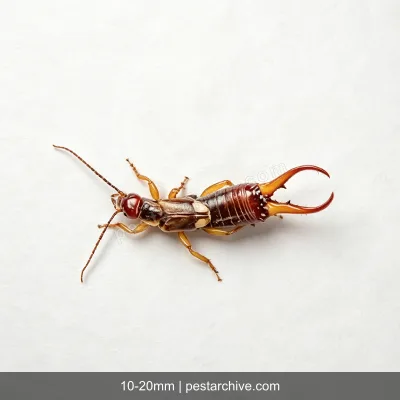
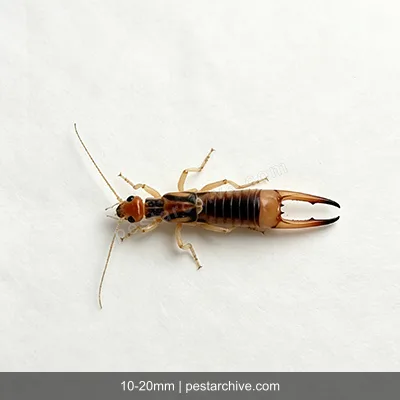
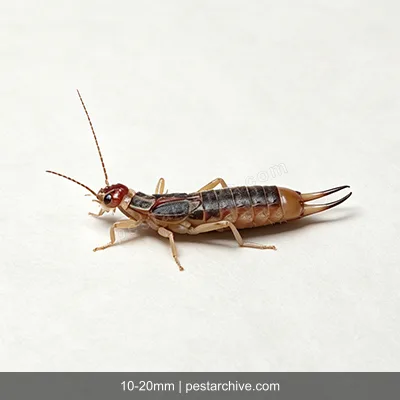
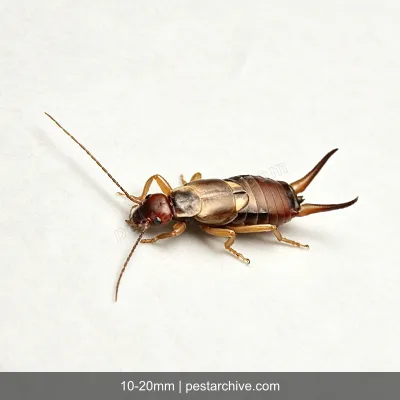
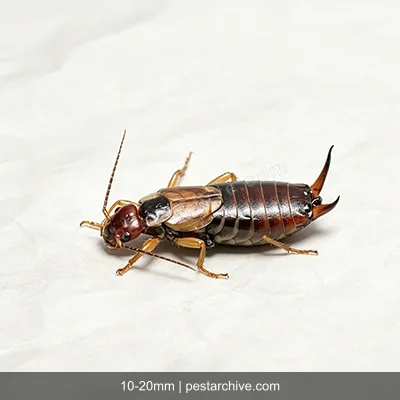
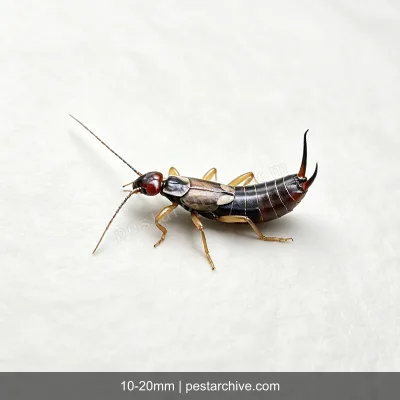
Earwigs (order Dermaptera) are distinctive insects with unmistakable forceps-like cerci at the abdomen tip. The common European earwig (Forficula auricularia) is the most frequent household species. Adults measure 10-20mm, elongated, flattened, dark brown to black-brown, glossy. Males have curved, stout forceps; females have straighter, shorter forceps. They have short leathery forewings and large, fan-shaped membranous hindwings folded beneath, though they rarely fly. Earwigs are hemimetabolous. A notable behavior: females show maternal care — guarding eggs and newly hatched nymphs in underground brood chambers. They are omnivorous, feeding on decaying plants and live small insects. In gardens, they prey on aphids and are actually beneficial.
Habits & Hiding Places
Earwigs are omnivorous, feeding on decaying plant matter, small insects, and organic debris. Indoors, they hide in baseboard and wall cracks (their flat bodies squeeze into the narrowest gaps), bathroom and kitchen damp corners (favoring high humidity — around floor drains, under sinks), balcony wall crevices and under flower pots (damp, dark refuges), and under beds and behind cabinets. They are strictly nocturnal, hiding in crevices by day and emerging at dusk. The forceps are used for defense and prey capture. They are sensitive to light and quickly flee to dark areas. In nature, they live in leaf litter, under stones, and beneath bark. They seek indoor shelter as autumn temperatures drop and return outdoors in spring.
Health Risks & Damage
- Earwigs' distinctive forceps and rapid crawling trigger fear and disgust, though they are essentially harmless.;
- Nocturnal activity in kitchens and bathrooms may bring them into contact with food surfaces. Although they don't carry serious human pathogens, contact with food surfaces is a hygiene concern.;
- The forceps can pinch defensively, but they rarely do so, and even if pinched, only mild momentary pain results — no venom is involved.;
- They do not damage structures, clothing, furniture, or stored food. Their impact is primarily psychological. Keeping indoor areas dry, sealing wall cracks, and clearing balcony clutter are the most effective control measures.
Season & Region
Cosmopolitan. Favors damp, dark environments. Active from late spring through autumn (May–Oct); peak reproduction around Aug. Positive phototaxis; may fly indoors at night. Distinctive forceps-like cerci; raise cerci in threat display when disturbed but do not actively attack humans.
| Region | Active Period | Peak Season | Notes |
|---|---|---|---|
| N. Hemisphere Temperate | May–Oct | Jul–Aug | Aug is peak reproductive period |