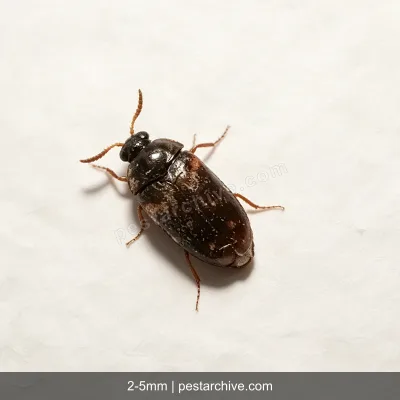
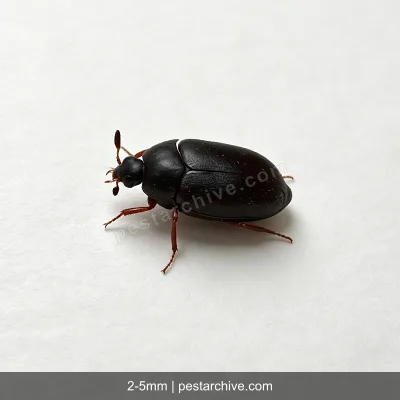
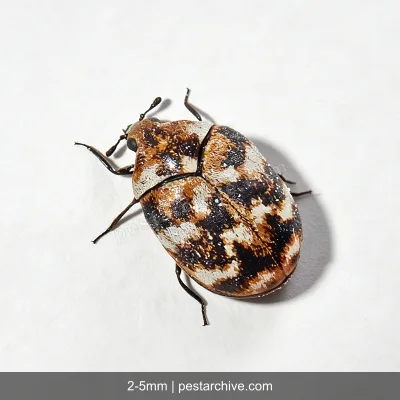
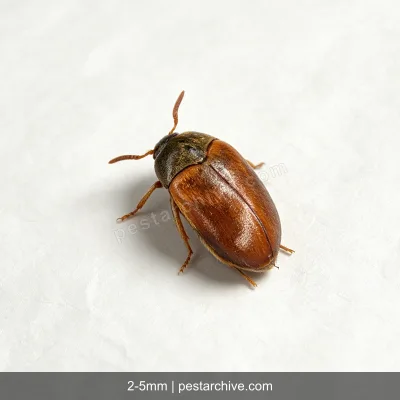
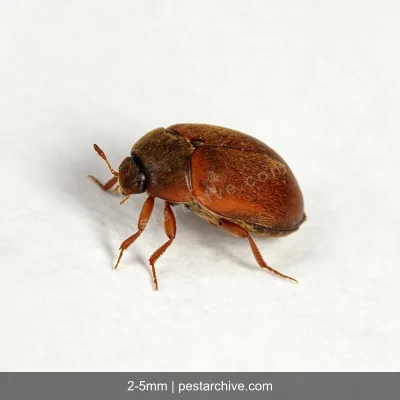
Carpet Beetles Control & Removal Guide
(Varied carpet beetle, Black carpet beetle, Buffalo beetle)*Anthrenus verbasci* / Dermestidae
How They Get In
- New wool sweaters, fur coats, down comforters, and used sofas or mattresses may carry carpet beetle larvae or eggs — larvae are barely visible and hide in clothing folds and fabric creases.
- Purchased dried fruits, Chinese herbs, and dry goods can carry larvae or eggs during packaging and transport — bulk dry goods are the highest-risk carriers.
- Wardrobes and storage boxes that are long-sealed, poorly ventilated, dark, and rarely disturbed provide ideal conditions for carpet beetle breeding — long-undisturbed seasonal clothing is precisely the optimal breeding environment.
- Carpet beetle sources in hallways, common storage rooms, and warehouse environments spread to individual units through wall gaps and cabinet crevices.
How to Get Rid of Them
- Pre-Treatment Cleanup: Carpet beetle larvae feed within animal-fiber products. Before spraying, remove and inspect all wool sweaters, cashmere items, down comforters, and leather goods. Isolate infested clothing for separate treatment — wash in water above 60°C or freeze at -18°C for 48 hours to kill all life stages. Empty wardrobes and drawers completely. Vacuum wardrobe crevices, drawer corners, and floor corner lint and dust. Close doors and windows. Remove pets and children. Shake the spray bottle well.;
- Key Treatment Zones: Wardrobe interiors — all shelf panel joints and back panel crevices (larvae hide deep in crevices during the day). Drawer corners and rail grooves — larvae can pupate and hide here. Storage box interior corner joints — larvae breed in long-undisturbed stored items. Bookcase corners and bookbinding seams — carpet beetles also feed on paper and bookbinding glue. Dry goods cabinet and herb drawer crevices — carpet beetles can equally feed and breed in dry goods.;
- Application Method: Hold sprayer 20-30cm from surfaces; spray in lines along crevices to allow chemical to flow naturally into depths. Wardrobe shelf panel joints and drawer bottoms are priorities — larvae and eggs hide in these crevices. Since larvae are photophobic and hide during the day, crevice spraying is far more effective than surface spraying. Spray wardrobes from top to bottom, ensuring each shelf joint is treated. Do not spray directly on clothing fabric — wait for the chemical to dry completely before returning clothes.;
- Post-Treatment: Keep wardrobe doors closed for 2-3 hours to allow thorough penetration into crevices. Then open wardrobe doors and ventilate rooms for 1-2 hours. Return cleaned and treated clothing only after the chemical is completely dry. Do not wipe wardrobe interiors with a damp cloth for 24 hours to preserve the residue film. Place mothballs or insect-repellent strips in wardrobes as supplementary protection when returning clothes.;
- Long-Term Prevention: Carpet beetle larvae can only complete development in long-undisturbed environments — regularly airing and using stored clothing is an effective preventive measure. Wash seasonal clothing, sun-dry, and store in vacuum-sealed compression bags to cut off larval food sources. Clean wardrobe interiors of lint and dust quarterly. Upon purchase, immediately transfer dry goods and herbs into sealed glass containers.
Prevention & Follow-Up
Store all wool clothing, leather goods, and dry foods in sealed compression bags or airtight containers. Wash and dry off-season clothes, then vacuum-seal them before long-term storage. Place mothballs or insect-repellent strips in closets and replace them on schedule. Clean lint and dust out of closets every quarter so larvae have fewer places to hide. Check stored wool sweaters, cashmere, and fur items regularly — if you spot signs of beetle damage, wash the item in hot water or freeze it right away. Transfer dry goods and herbs into sealed glass jars after purchase.