Where Do Cigarette Beetles Lay Their Eggs?
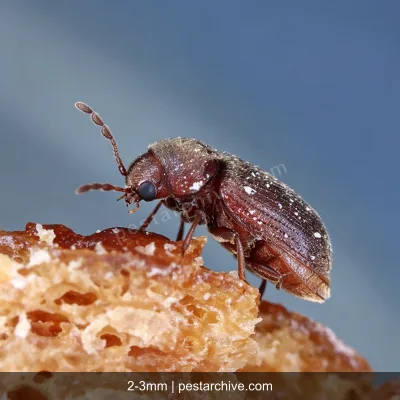
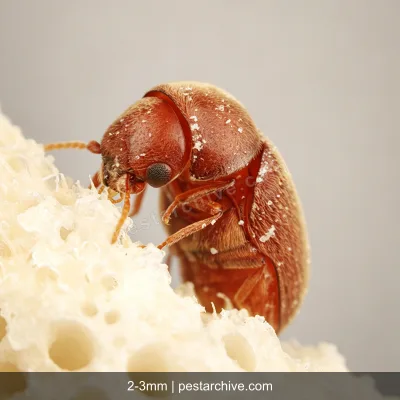
Where Do Cigarette Beetles Lay Their Eggs?
Cigarette beetle eggs are extremely tiny and virtually invisible to the naked eye. This is one reason they're so hard to detect and prevent.
Egg Size and Appearance
- Diameter: about 0.3–0.5 mm, smaller than a pinhead
- Oval-shaped, creamy white or pale yellow
- Surface is smooth
- Nearly impossible to identify with the naked eye
Egg-Laying Locations
Female beetles scatter eggs in the following places:
- Food surfaces — in the folds of dried fruit, the indentations of red dates
- Packaging crevices — folded corners and sealed edges of bags
- Between the root fibers of herbs — gaps in goji berries, the center of chrysanthemum flowers
- Container corners — in food crumbs at the bottom of jars
Egg Production
A single female can produce dozens to over a hundred eggs. At favorable temperatures (25–30°C / 77–86°F), eggs hatch within 3–7 days.
Post-Hatch Behavior
- The egg hatches into an extremely tiny larva
- The larva immediately burrows into the food
- It feeds and develops deep inside the food
- By the time you notice, there's likely already a whole brood inside
Why Prevention Must Be Proactive
Because cigarette beetle eggs are so tiny (0.3–0.5 mm), visual inspection simply can't detect them. Even if you carefully examine every goji berry and every tea leaf, you can't see the eggs. So prevention can't rely on "deal with it when you see it" — you need to be proactive:
- Freeze newly purchased dry goods immediately (-18°C / 0°F for 48 hours to kill eggs)
- Then store in airtight containers (to prevent adult beetles from entering and laying new eggs)
- Inspect regularly (to catch larvae early — larvae are much larger than eggs and easier to see)
- Once you find larvae, it means the eggs were laid weeks ago — you must immediately dispose of the entire package
Important Understanding
A common mistake: people visually inspect their food, think "it looks clean enough," and put it away. In reality, the eggs are completely invisible. The correct approach is: regardless of whether you can see anything, ALL opened dry goods must be frozen + sealed to deny eggs the chance to hatch.