How to Keep Rats from Climbing Into Your Roof


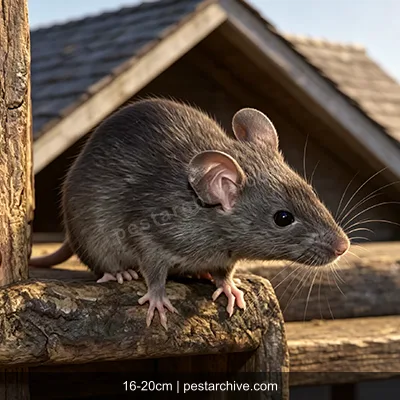
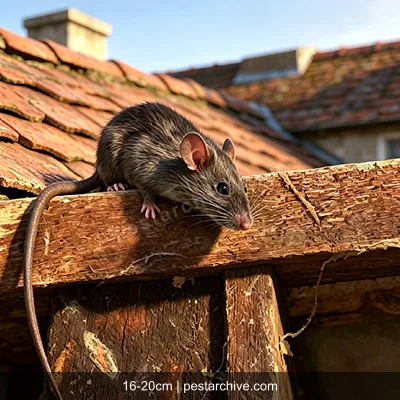



Roof Rats are exceptional climbers. They can scale vertical pipes, run along utility wires, jump 3 feet vertically, and climb any textured surface. If your roof has even a single reachable route — a tree branch, a drainpipe, a power line — Roof Rats will find it and exploit it repeatedly.
Preventing Roof Rats from reaching your roof is fundamentally different from preventing Norway Rats from entering at ground level. You must think in three dimensions: from the ground up to the roofline, identifying every possible climbing route and blocking each one.
### Climbing Route 1: Trees and Vegetation
This is the #1 route by which Roof Rats reach roofs.
- Trim all branches at least 6 feet (2 m) away from the roof and 3 feet (1 m) away from exterior walls. This eliminates the direct bridge from tree to structure.
- Remove climbing vines (ivy, jasmine, wisteria) from exterior walls entirely. Vines provide a continuous vertical ladder from the ground to the roof.
- Thin dense canopy over the roof — palms, eucalyptus, and fruit trees with heavy foliage overhanging the roof create both climbing routes and harborage.
- Install tree trunk guards — sheet metal cylinders (18–24 inches wide) wrapped around tree trunks at 4–5 feet above ground prevent rats from climbing the trunk itself. Secure with wire or screws; leave room for trunk growth.
### Climbing Route 2: Drainpipes and Downspouts
- Install rat guards — cone-shaped metal collars that fit around drainpipes. A rat attempting to climb the pipe encounters the cone and cannot pass it. Install guards at 4–5 feet above ground.
- Alternative: wrap the lower 4 feet of drainpipes with ¼-inch hardware cloth secured with wire ties. Rats cannot grip the mesh surface.
### Climbing Route 3: Utility Lines and Cables
- Install line guards — plastic or metal tubes that encase utility lines where they attach to the house, preventing rats from running along the line onto the roof.
- Trim vegetation away from lines — do not allow tree branches to touch or overhang utility wires.
- Coordinate with your utility company — some providers install line guards as a free or low-cost service.
### Climbing Route 4: Vertical Walls and Fences
Roof Rats can climb rough-textured walls (brick, stucco, stone) and wooden fences directly:
- Install metal flashing along the top edge of fences and walls — a 6-inch band of smooth metal that rats cannot grip.
- For smooth walls (painted concrete, metal siding), rats cannot climb directly but will exploit any protrusion — pipes, conduit, downspout brackets, or decorative elements. Seal gaps around these attachments.
### Climbing Route 5: Gutters
- Install gutter guards — metal mesh covers that prevent rats from entering gutters and nesting inside.
- Clean gutters regularly — debris-filled gutters provide both harborage and a climbing path to the roof edge.
### Sealing Roof-Level Gaps
Even after blocking climbing routes, rats that reach the roof (via jumping or a missed route) need an entry gap to get inside:
- Soffit vents — replace damaged panels; screen vents with ¼-inch hardware cloth.
- Roof vents and gable vents — cap with metal screening.
- Chimney — install a screened chimney cap.
- Flashing gaps — where the roof meets walls, chimneys, and dormers, seal with copper mesh and caulk.
- Skylights — check seals around the frame; re-caulk if gaps exist.
- Roof-edge gaps — where sheathing meets fascia; seal any openings larger than ¼ inch.
### Integrated Strategy: Ground + Roof Together
The most effective programs combine ground-level exclusion (for Norway Rats) with roof-level exclusion (for Roof Rats) in a single comprehensive pass. Walk the entire exterior of your home — from foundation to ridge — and seal every gap ≥¼ inch, install every guard, and trim every climbing route in one coordinated effort.
### Monitoring for New Activity
After completing exclusion:
- Place a few unset baited snap traps in the attic and along fence lines as surveillance. If rats are still reaching the roof, these traps will catch them and tell you that a route was missed.
- Check tree branches quarterly — new growth can close the gap you trimmed.
- Inspect soffit and vent screens annually for weather damage.