What Does a Kissing Bug Look Like? ID Guide for Bugs That Bite Around the Mouth at Night + Home Protection
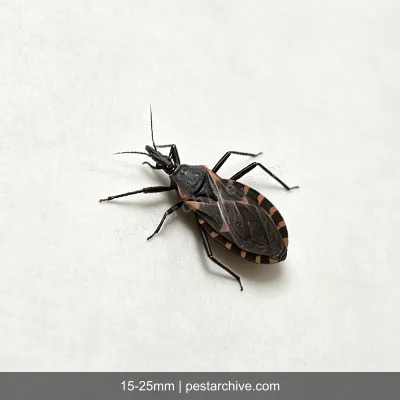
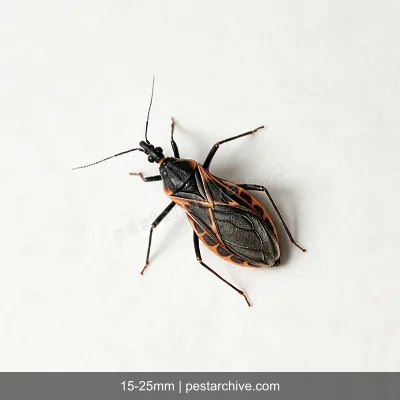
Did a Kissing Bug Bite You? First, Confirm It's Actually One
Kissing bugs (Triatominae) are blood-feeding insects named for their habit of biting people on the face – especially around the lips and eyes where skin is thinner. They're active at night, and people usually don't feel the bite when it happens.
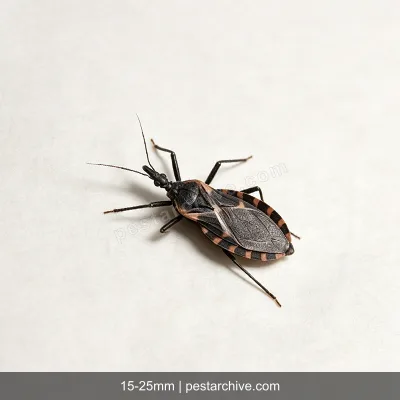
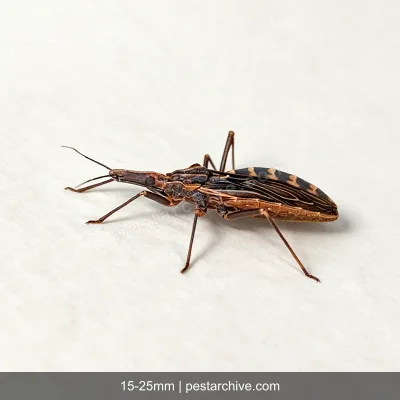
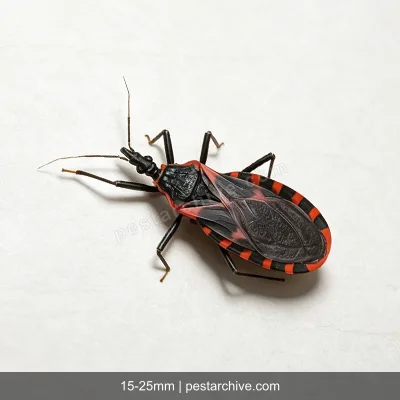
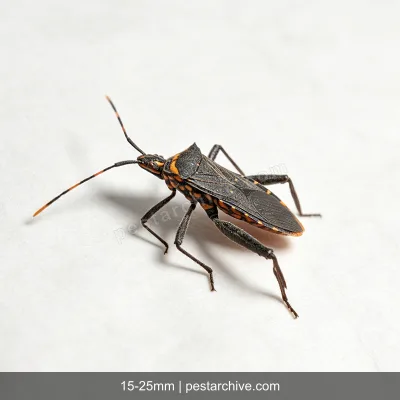
Kissing bug features (how to tell them from common stink bugs):
- Size: Adults are about 1.5-3cm long, flattened and oval-shaped. Flat when unfed, the abdomen swells into a ball after feeding
- Head: Cone-shaped head (like a cone or triangle from the side) – this is the key feature. At the front is a long, needle-like proboscis (mouthpart) that folds under the head. Stink bugs have round, blunt heads without a prominent cone shape
- Color: Dark brown or black body with orange/yellow or red banded markings along the edge of the abdomen (called the connexivum) – like a colorful border on each side
- Wings: They can fly. Front wings are thickened at the base and membranous at the tip (common to all true bugs in this family)
- Legs: 6 long, slender legs – good climbers
Compared to common stink bugs: Kissing bugs have a cone-shaped head (like a pointy cone); stink bugs have round heads. Kissing bugs have orange-red banding along the abdomen edge; stink bugs usually don't. Kissing bugs have a long needle-like proboscis tucked under the head; stink bugs have short thick mouthparts.
Kissing Bugs and Chagas Disease – What's the Connection?
Kissing bugs don't directly transmit disease through their bite – it's transmitted through their feces. Here's how it works: while feeding, the bug defecates on the skin. Your fingers unconsciously scratch the bite site while you sleep, rubbing the feces (which may contain the parasite Trypanosoma cruzi) into the bite wound, eyes, or mouth – leading to Chagas infection.
Chagas is primarily found in Latin America, but cases have been reported in North America, Europe, and parts of Asia. Most infected people have no acute symptoms – they may only develop chronic heart or digestive complications years later. That's why prevention is much more important than treatment.
Physical Home Protection Steps Against Kissing Bugs
Step 1: Block Their Entry Routes
- Window and door screens: Check all screens for tears – any hole (even 1cm) needs patching. Kissing bugs fly at night, attracted to outdoor lights and landing on screens
- Gaps around doors and windows: Install weatherstripping under doors (if gap is over 3mm). Seal gaps around closed windows too
- Exterior wall cracks: Check for cracks and holes in exterior walls – kissing bugs hide in them during the day. Fill with mortar or sealant
- Vents and chimneys: Install fine mesh screens (under 3mm openings)
Step 2: Reduce Things That Attract Kissing Bugs
- Outdoor lighting: Kissing bugs are attracted to light. Don't install bright lights outside bedroom windows (use motion-sensor lights instead of always-on). If you need outdoor lights, use yellow/amber LEDs – less attractive to insects than white light
- Yard maintenance: Remove wood piles, rock piles, leaf piles, and debris around the house – these are daytime hiding spots. Keep wood piles at least 15 feet (5m) from the house and elevated off the ground
- Pet management: Pets (dogs, cats) are also hosts. Keep pets indoors at night. Check and wash pet bedding regularly
Step 3: Physical Bed Barriers
- Move bed away from walls: Don't push beds against the wall – leave at least 4 inches (10cm) gap. Kissing bugs typically climb walls to reach the bed
- Bed net: If you live in a high-risk area, use a fine-mesh bed net with edges tucked under the mattress
- Keep bed off the floor: If your bed frame sits directly on the floor, smear a ring of petroleum jelly around each leg – kissing bugs can't cross it
Step 4: What to Do If You Find a Kissing Bug Indoors
Don't squash or crush it with your hand – fluids and feces may contain parasites and could splash onto your skin. Instead:
- Cover the bug with a clear cup or jar, slide a piece of stiff paper underneath to trap it, and seal the container
- Take the bug (in its sealed container) to your local health department or vector control office for identification
- Don't touch the bug directly
- If you find a kissing bug in your bed, do a full room check the next day – especially wall cracks, bed frame joints, and headboard gaps
If you live in an area where kissing bugs are common (Latin America, southern US), check with local health authorities about Chagas risk in your region.
What NOT to Do with Kissing Bugs
- Don't squash or crush them with your hands: Fluids and feces may contain T. cruzi, which can enter through small skin breaks or mucous membranes
- Don't spray large amounts of insecticide in the bedroom: Spraying at night means you inhale chemicals in a closed room. Physical barriers (screens, sealed gaps, bed nets) are more effective at night and have zero chemical risk
- Don't ignore even one: Seeing one often means there are more nearby
Kissing Bug Home Protection Checklist
- Are all window screens intact with no holes?
- Are gaps under doors and around windows sealed with weatherstripping?
- Are exterior wall cracks and holes filled with mortar or sealant?
- Are wood piles and debris cleared from around the house?
- Is the bed at least 4 inches (10cm) from the wall?
- Is the light outside the bedroom a yellow/motion light, not bright white always-on?
- If you find one, do you trap it with a cup rather than squashing it?
- Do pets sleep indoors at night?