Wood Beam Hollow? How to Tell If It's Old House Borers – Signs + Who to Call
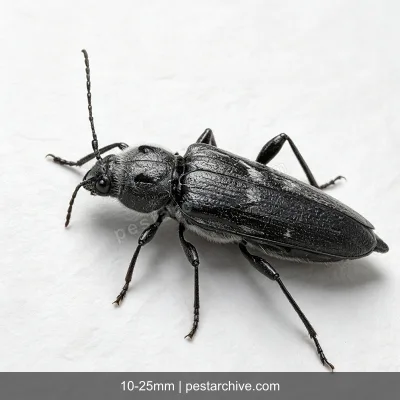
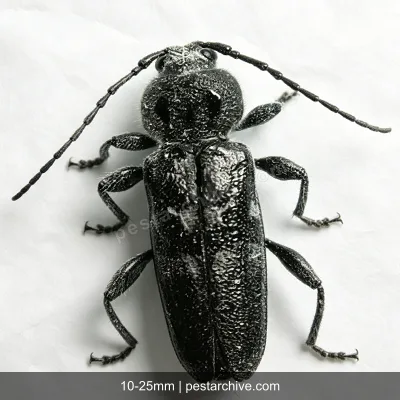
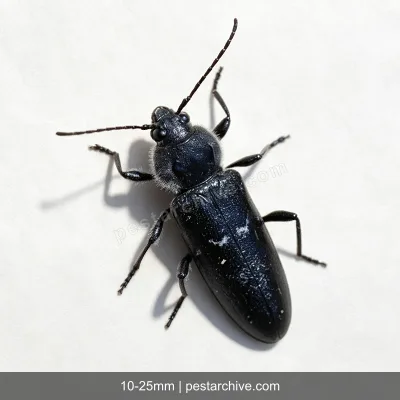
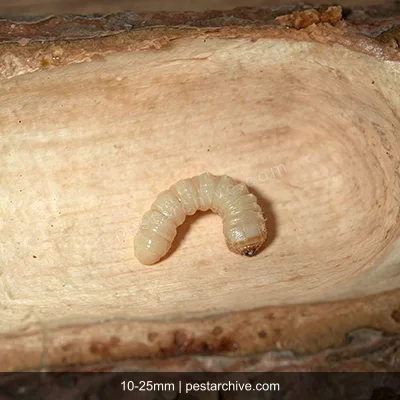
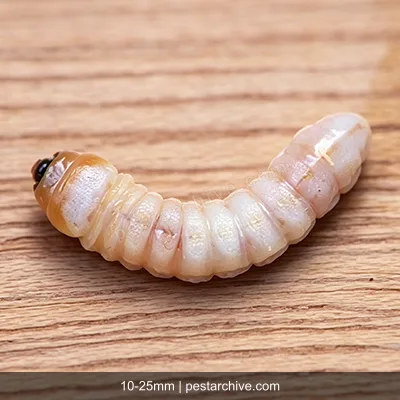
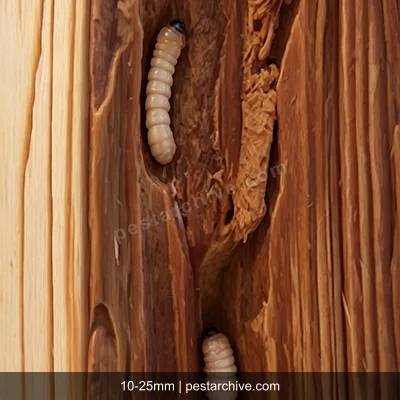
Is Your Wood Beam Damaged by Old House Borers? 3 Signs to Check
The old house borer (Hylotrupes bajulus) is one of the most destructive wood pests worldwide. Its larvae feed deep inside timber – hard to spot from the outside, and by the time you notice, they've often been at it for years. Here are three signs:
Sign 1: Fine sawdust piles under the beam
This is the most obvious sign. When old house borer larvae feed inside the wood, they push out a mixture of sawdust and frass through the emergence holes, forming small piles beneath the beam. The sawdust is very fine – like flour or fine powder – and feels rough/grainy when rubbed between fingers. The color matches the wood (light yellow for pine, reddish-brown for cedar). The piles usually sit on the floor, ceiling, or attic boards directly under the beam.
Sign 2: Small oval holes on the wood surface
When adult beetles emerge from inside the wood, they chew oval exit holes. These holes are about 6-10mm long and 3-5mm wide – oval, not round. Distinguish from: round 1-2mm holes (powderpost beetles) and round 6-8mm holes (other longhorn beetles). Old house borer holes are distinctly oval – this is the key differentiating feature.
Sign 3: Ticking sound from the wood in quiet conditions
In the dead of night (especially summer, when larvae are most active), put your ear near the beam and listen carefully. If you hear a faint "ticking" or "scratching" sound – like fingernails scraping wood – that's larvae feeding inside. The sound isn't loud – you need a quiet environment and to be close to the beam to hear it.
If you have two or more of these signs, it's highly likely old house borers.
What to Do If It's Old House Borers?
Don't spray anything yourself. Old house borer larvae are deep inside the wood (possibly 2-4 inches/5-10cm in) – surface insecticides can't reach them. DIY spraying wastes time and money – and worse, it gives you a false sense of "I've treated it," delaying real action.
Correct approach has two steps:
Step 1: Assess the scope (you can do this)
Tap the beam surface lightly with a screwdriver or small hammer. Solid wood sounds sharp and hard; hollow wood sounds dull and empty. Mark all areas with hollow sound, and circle all emergence holes with pencil. Also check other timber in the house: roof rafters, attic beams, window frames, door frames, staircases. Old house borers rarely infest just one beam – they've usually spread to adjacent timber.
Step 2: Call a licensed pest control company or timber treatment specialist
Old house borers require professional equipment and methods – beyond DIY. Pros will assess the damage (can it be injected or does the beam need replacing), use drill-and-inject methods to introduce professional-grade preservatives deep into the wood, or replace/reinforce severely damaged beams.
Don't wait until the beam breaks. Old house borer larvae can live 3-10 years inside wood, expanding their tunnels every year. By the time you see visible sagging or cracking, structural integrity is already compromised.
Quick Comparison: Old House Borers vs Powderpost Beetles
- Sawdust texture: Old house borer – fine as flour; powderpost – also fine but slightly coarser, like fine sand
- Hole shape: Old house borer – oval (6-10mm long); powderpost – round (1-2mm)
- Wood preference: Old house borer – structural softwoods (pine, spruce, fir); powderpost – hardwoods (oak, beech, bamboo) in furniture
- Damage depth: Old house borer – can hollow out entire beam; powderpost – usually just the surface 1-3cm
How to Prevent Old House Borer Infestation?
New construction or renovation: Use pressure-treated or preservative-treated timber – ask your supplier if it's been treated for insect resistance. Check beams for emergence holes or signs of infestation before installation.
Existing homes: Keep timber areas (attic, roof cavities) well-ventilated and dry. Old house borers prefer wood with moderate moisture (15-25%) – very dry wood is unsuitable for larvae. Fix roof leaks immediately (leaks raise timber moisture content). Do a visual check of visible beams every summer for fresh sawdust or new holes.
Common Old House Borer Myths
- Myth: Holes in beams mean old house borers. Fact: They could be old exit holes from before the timber was installed – not necessarily an active infestation. Check for fresh sawdust to determine activity.
- Myth: Surface spray solves it. Fact: Larvae are 2-4 inches (5-10cm) inside – surface spray does nothing.
- Myth: Only old houses get them. Fact: New homes using untreated or poorly treated timber can also be infested.