Grain Borer vs. Rice Weevil: Key Differences
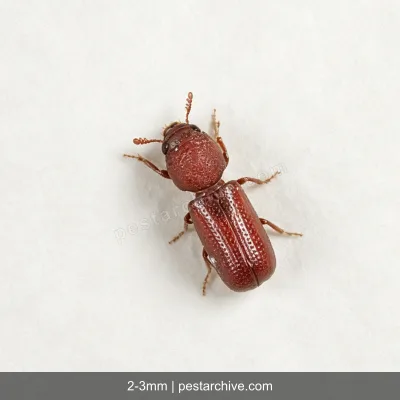
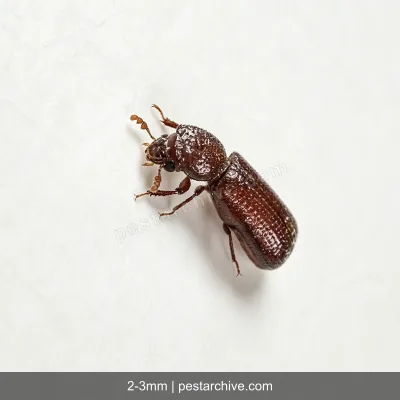
What's the Difference Between Lesser Grain Borers and Rice Weevils?
Both lesser grain borers and rice weevils are common stored-product pests, but they differ clearly in appearance, behavior, and the type of damage they cause.
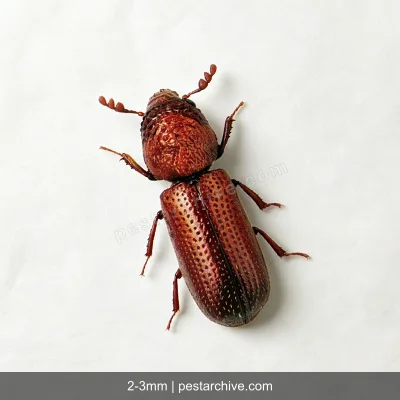
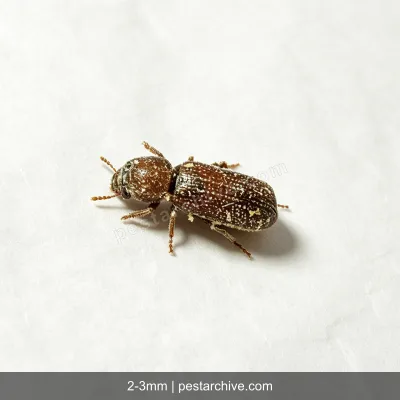
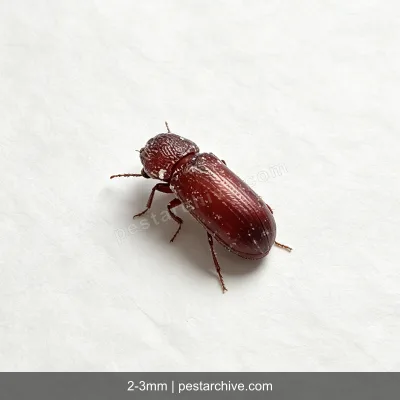
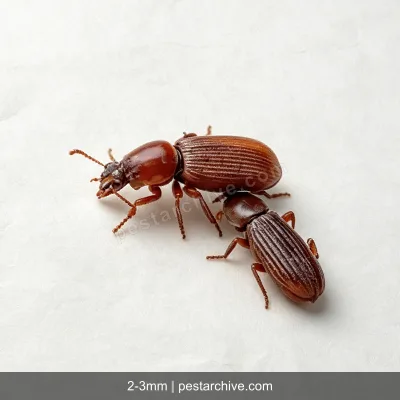
Appearance Differences
| Feature | Lesser Grain Borer | Rice Weevil |
|------|------|------|
| Body shape | Cylindrical, like a tiny barrel | Elongated oval |
| Head | Tucked under thorax, not visible from above | Extended forward into a snout-like rostrum |
| Color | Dark brown to reddish-brown | Dark brown to black |
| Size | 2–3 mm | 2.5–3.5 mm |
| Back | Fine punctures, no markings | 4 pale spots |
| Antennae | Last 3 segments enlarged and flattened | Elbowed (geniculate), club-shaped tip |
Behavioral Differences
Activity Patterns
- Rice weevil: mostly active on the grain surface; lays eggs on the grain surface; moves slowly
- Lesser grain borer: prefers tunneling deep into the grain pile; lays eggs in grain crevices
Flight Ability
- Rice weevil: has wings but rarely flies
- Lesser grain borer: can fly and actively seeks new food sources
Packaging Damage
- Rice weevil: cannot chew through packaging
- Lesser grain borer: can chew through plastic and paper bags
Damage Characteristics
Grain Damaged by Rice Weevils
- Rice grains have round holes
- Relatively little powder
- Not many empty shells
- Kernels can still be sorted
Grain Damaged by Lesser Grain Borers
- Large amounts of powder and debris
- Many empty shells, few intact kernels
- Grain pile may heat up and clump
- Sour, unpleasant odor
- Much greater overall loss
Control Differences
The control methods for both pests are basically the same — sealed storage, freezing treatment, environmental chemical treatment. But because lesser grain borer damage is more severe, you need to act more decisively when you find them. Don't hold onto infested grain out of reluctance — if it needs to be thrown out, throw it out.