Small Beetle Flying in the Kitchen. Is It a Bean Weevil?
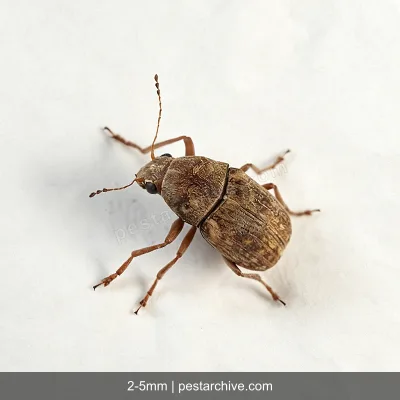
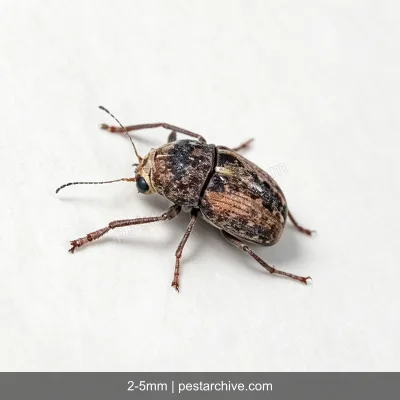
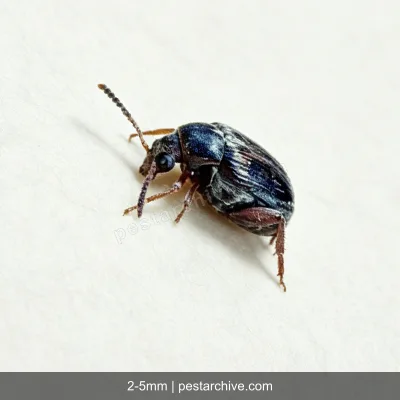
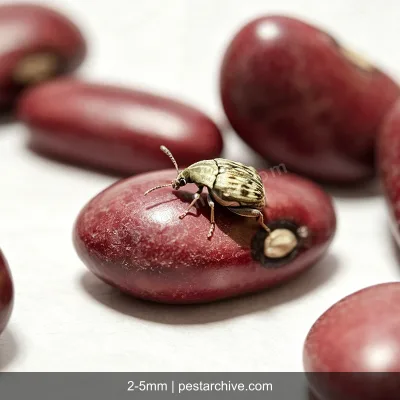
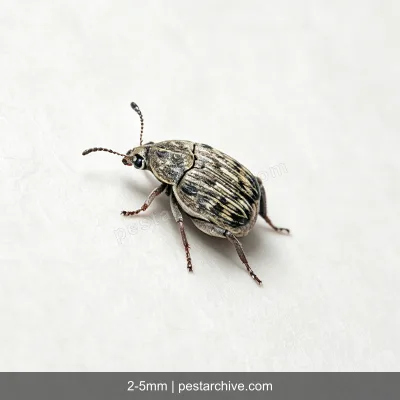
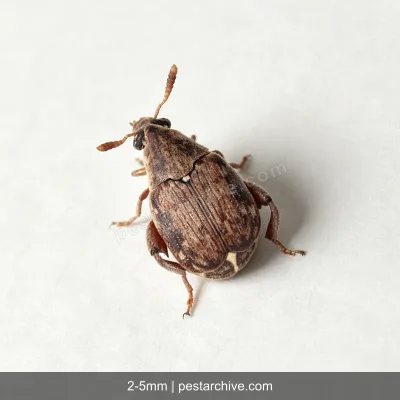
Real scene: A small dark-brown beetle is crawling on your kitchen windowsill. You lean in for a closer look. It's about the size of a grain of rice. You open the cabinet and check. The bag of red beans has more of the same tiny bugs moving inside. You start to worry: Has the whole cabinet of dried goods been compromised?
Quick answer: The three main small beetles that appear in dried goods are: bean weevils (oval-shaped, near beans), rice weevils (with a long snout, in rice), and drugstore beetles (round, in herbs and spices). You can tell them apart by their shape, whether they have a long snout, and what food they're near.
Comparing the three common stored-product beetles
Bean weevil
- 3 to 5 mm long, oval, dark brown or reddish-brown, with short fuzz on the back.
- No long snout. Head is normal-sized.
- Main targets: all types of beans, including red beans, mung beans, soybeans, peas, and fava beans. Also affects peanuts.
- Adults lay eggs on bean surfaces. Larvae burrow inside the bean and feed, pupate inside, and adults chew their way out. The small round holes you see on beans are exit holes.
- Adults can fly and are attracted to light. You'll see them near windows during the day.
Rice weevil
- 2 to 3 mm long, slightly smaller than bean weevils, dark brown, with four pale spots on the back.
- Most distinctive feature: a long, snout-like extension from the head (like a miniature elephant trunk). Bean weevils and drugstore beetles don't have this.
- Main targets: rice, wheat, corn, and other grains. Larvae feed inside rice kernels. Adults leave round exit holes when they emerge.
- If you see small holes in rice grains, grains that are light and brittle, or many grains floating when you rinse rice, that's signs of rice weevil damage.
Drugstore beetle (herb beetle)
- 3 to 4 mm long, round, reddish-brown or yellowish-brown, like a tiny pill.
- Head is tucked under the thorax. You can't see it from above. This is the most obvious visual difference from bean weevils.
- Main targets: a very wide range, including herbs, tea, dried chili peppers, goji berries, biscuits, pet food, and dried plant specimens. Not limited to beans or grains.
- When disturbed, they curl up and play dead for a few seconds to minutes.
Quick identification guide
If you find a small beetle in the kitchen, use these clues to identify it:
- Near beans, oval-shaped, no long snout = most likely a bean weevil.
- In the rice container, with a long snout = rice weevil.
- Near herbs, tea, or dried chili peppers, round like a pill, no visible head = drugstore beetle.
- Near flour, biscuits, or pet food, very small (1 to 2 mm), reddish-brown = could be a red flour beetle or confused flour beetle (another common stored-product pest).
What to do when you find one
- Immediately seal any infested dried goods in a plastic bag and take them straight to the outdoor trash. Don't open them to check in the kitchen. Adults will fly out and spread to other items.
- Check nearby items, especially those in the same cabinet. Look at the bottom for powdery debris. That's a sign of larval activity.
- Empty the cabinet. Vacuum up all powder and debris from the floor and corners. Seal the vacuum bag and discard it immediately. Wipe all surfaces inside with hot water and let dry.
- Transfer any remaining uninfested dried goods to airtight containers. If you can, freeze them for 48 hours before putting them back in the cabinet.
Common mistakes
- Mistake 1: Any flying beetle in the kitchen is a bean weevil. Fact: Several stored-product pests can fly, including bean weevils, drugstore beetles, and Indian meal moths (a small moth). You can't identify them just by whether they can fly.
- Mistake 2: One or two beetles aren't a big deal. Fact: The life cycle of stored-product pests is usually 30 to 50 days. A single female can lay dozens to hundreds of eggs. If you're seeing a couple of adults now, the infestation has been going on for at least one full life cycle.